Reflective Design
How does design respond to a generation that grew up lonely inside a hyper-connected world? Gen Z reports loneliness as its defining feeling; not despite the internet, but partly because of it. The industry's answer so far has mostly been more AI, more simulated companionship: frictionless, profitable, and quietly isolating. Our task was to ask a different question – what if design took the invisible seriously again? Not cleaner interfaces, but braver ones that make room for emotion, tension and friction: the messy material real connection is actually made of.
In collaboration with Luna Brumund, we built Reflective Design, a framework grounded in Self-Determination Theory – the idea that people face friction and grow through it, rather than avoid it, when three psychological needs are met: competence, autonomy and relatedness.
From this, three design pillars: Attentive, Proactive and Social design, forming a continuous cycle of input and output, of listening and sharing. A practice that shifts perspective and gives space through design, both on- and offline.
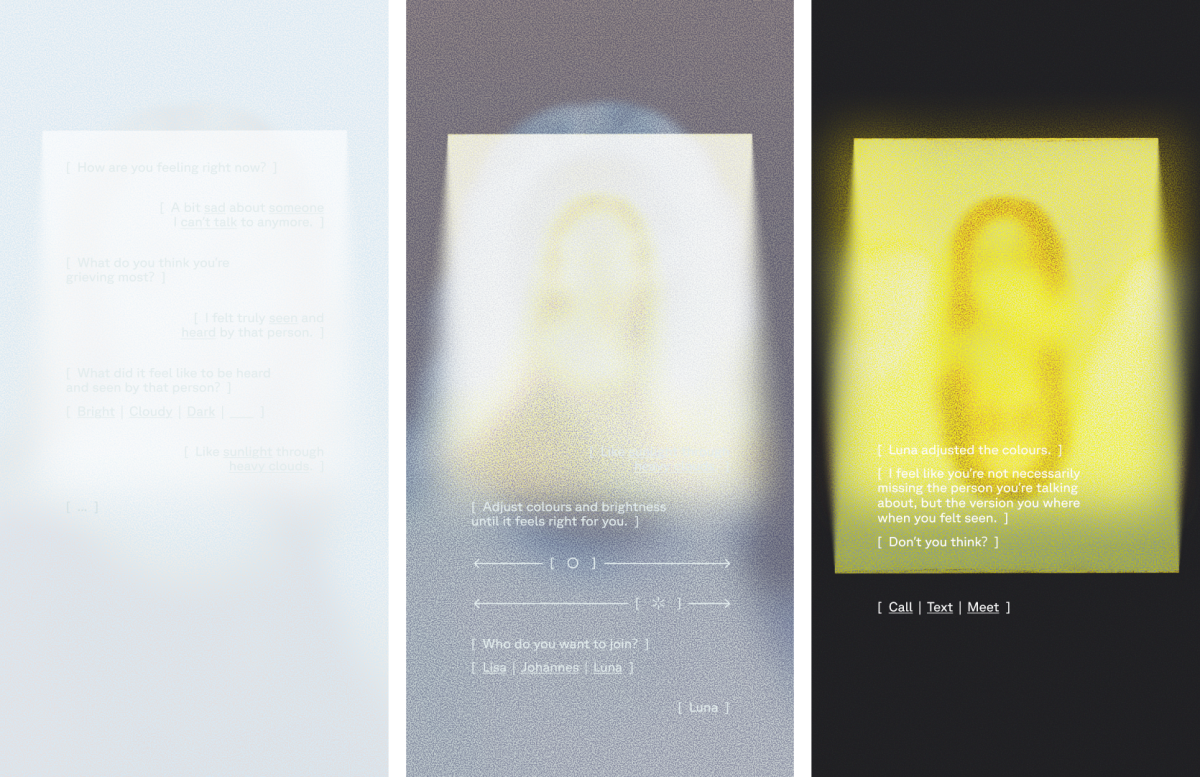
Attentive design holds space rather than filling it: a quiet, prompt-based interface that helps people name and understand what they're feeling, rather than assuming it for them.
Proactive design hands back authorship; self-directed sliders and choices that let people shape their own emotional expression instead of following a script.
Social design turns private reflection into shared experience: mirroring feelings back within a relationship, then nudging people from screen to real contact – Call, Text, Meet.
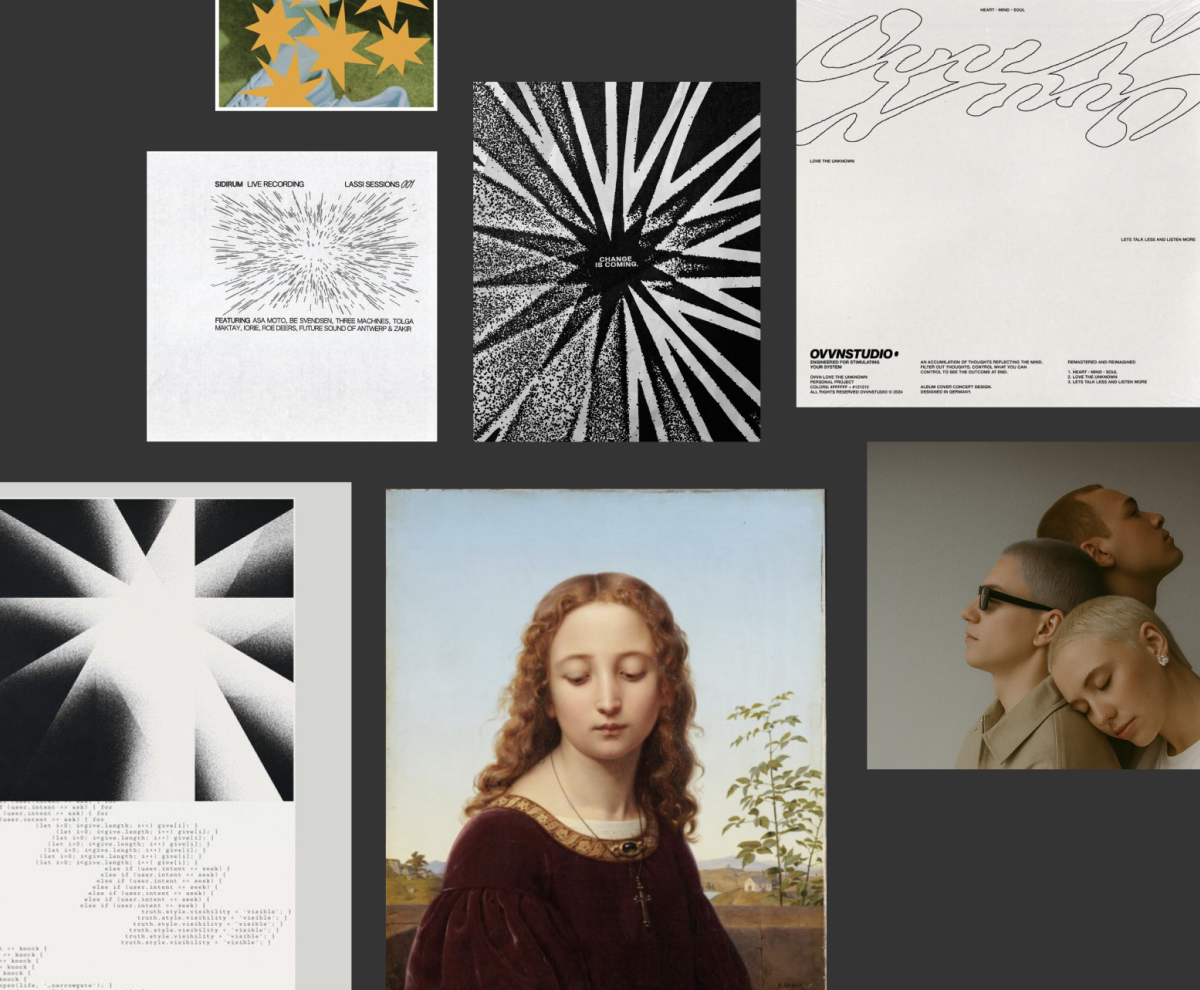
Throughout, the visual language plays out the project's core tension: cold, grainy, algorithmic gradients against warm, tactile analog photography; because the goal was never to design better simulated companionship. It was to design a way back to each other.
See the full project documentation here.
Concept & visual design in collaboration with Luna Brumund (research & strategy).